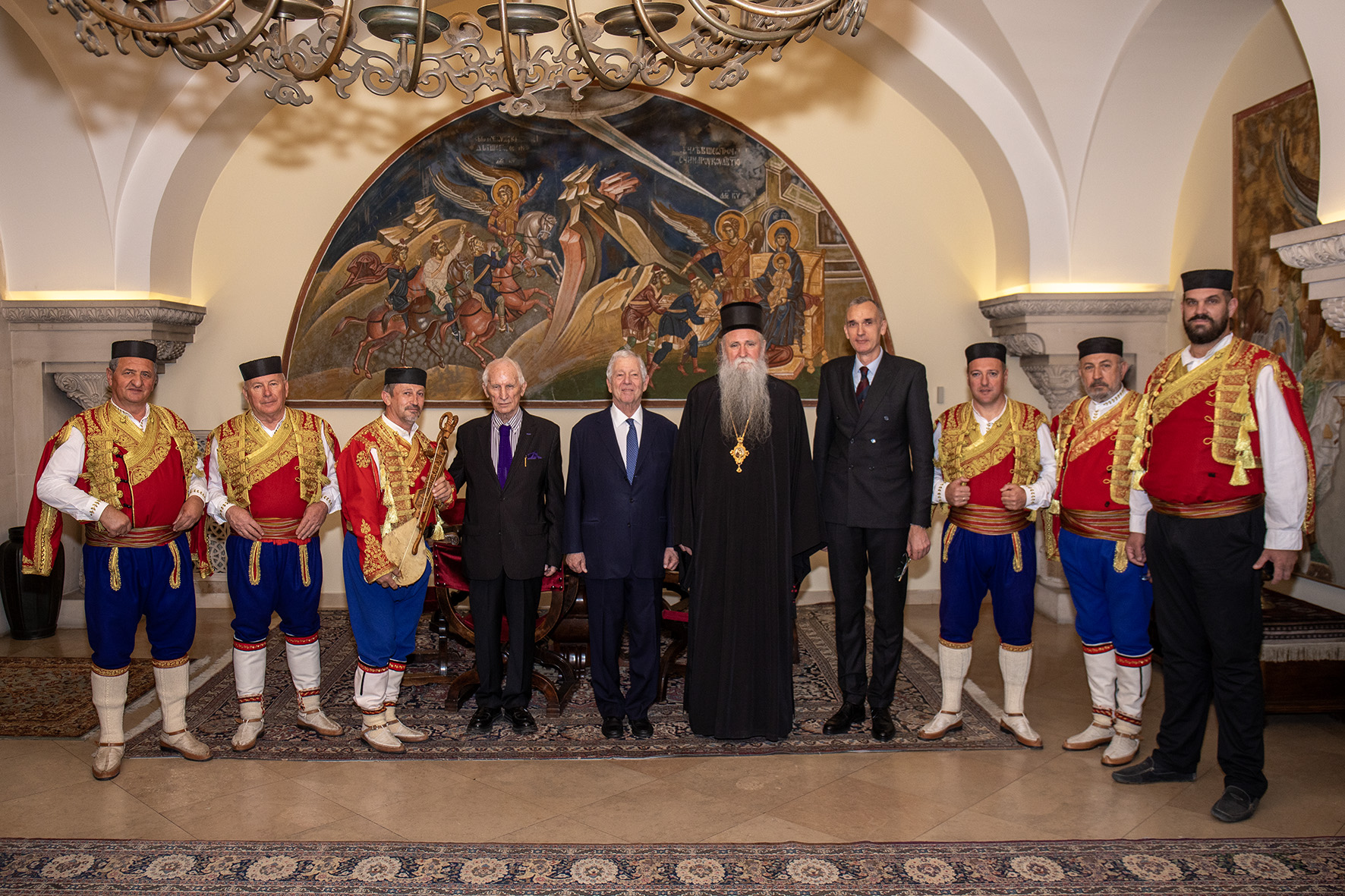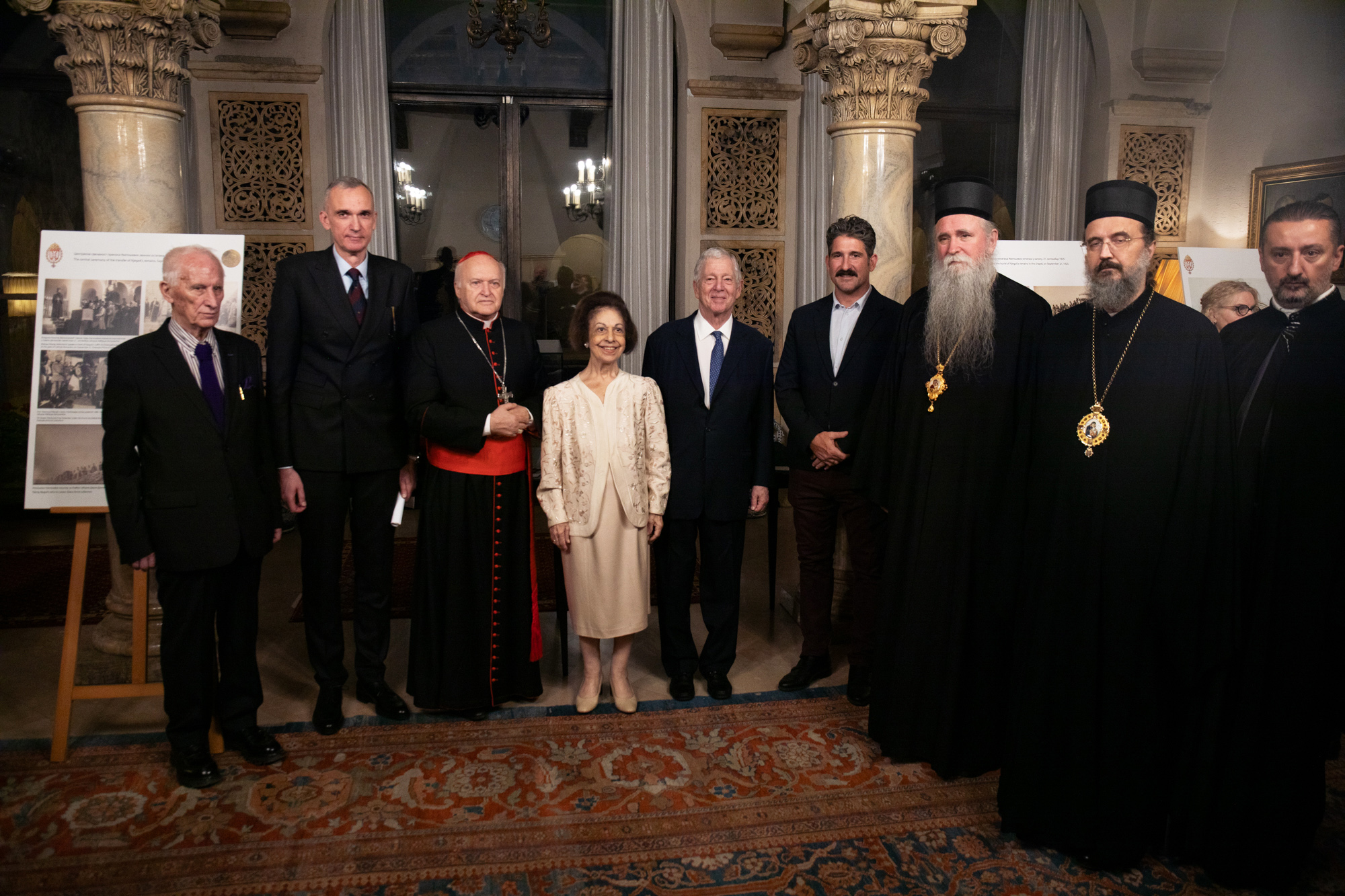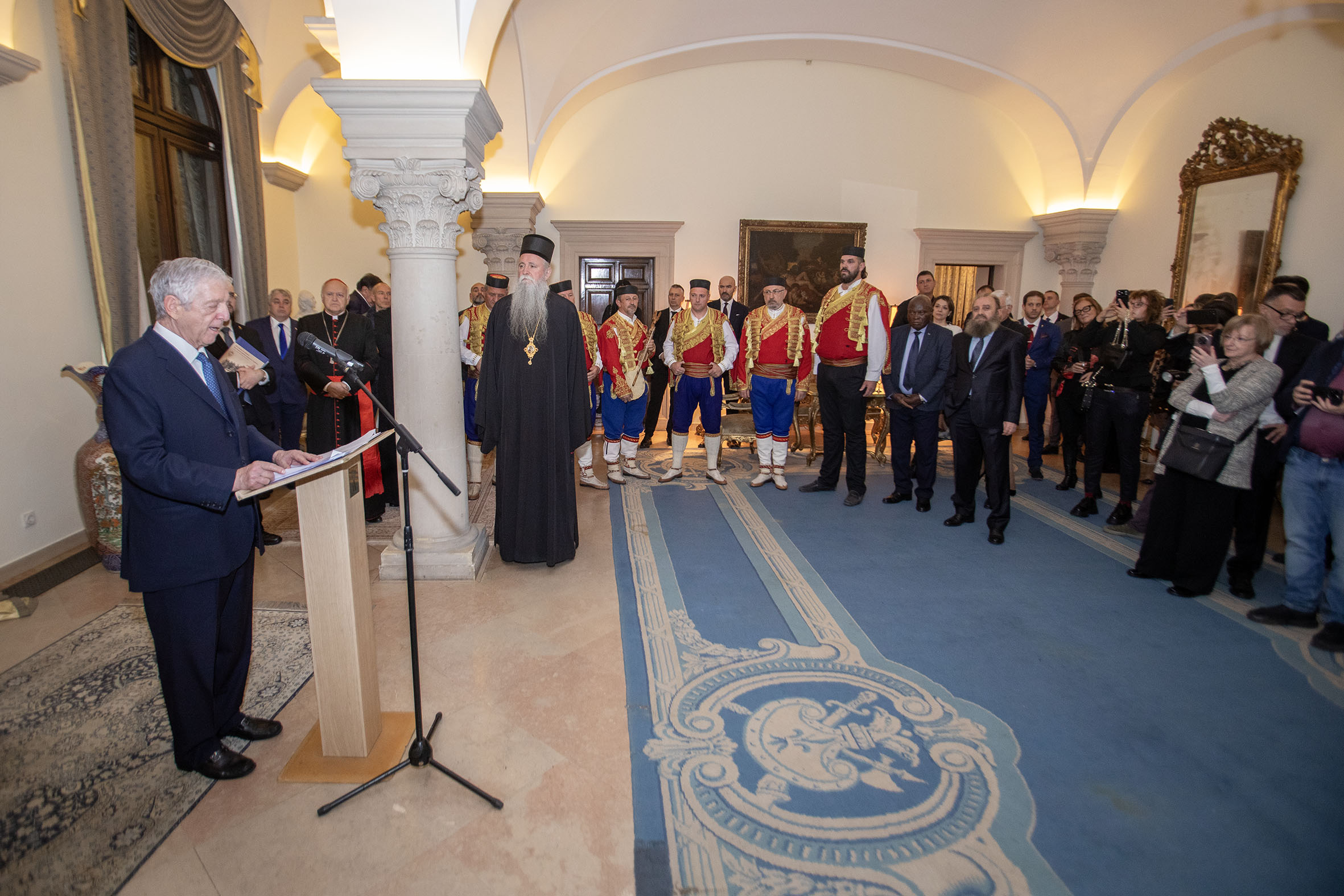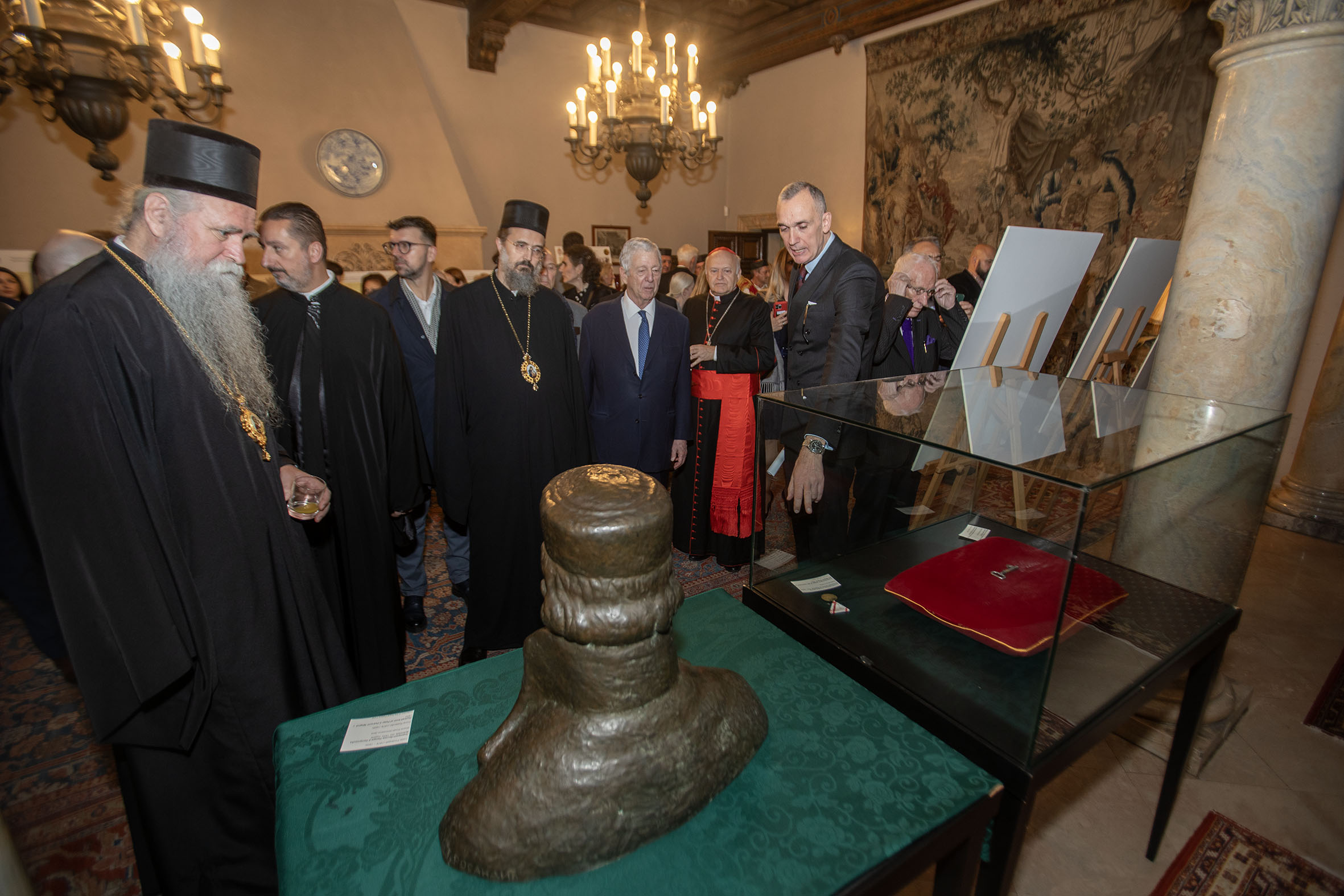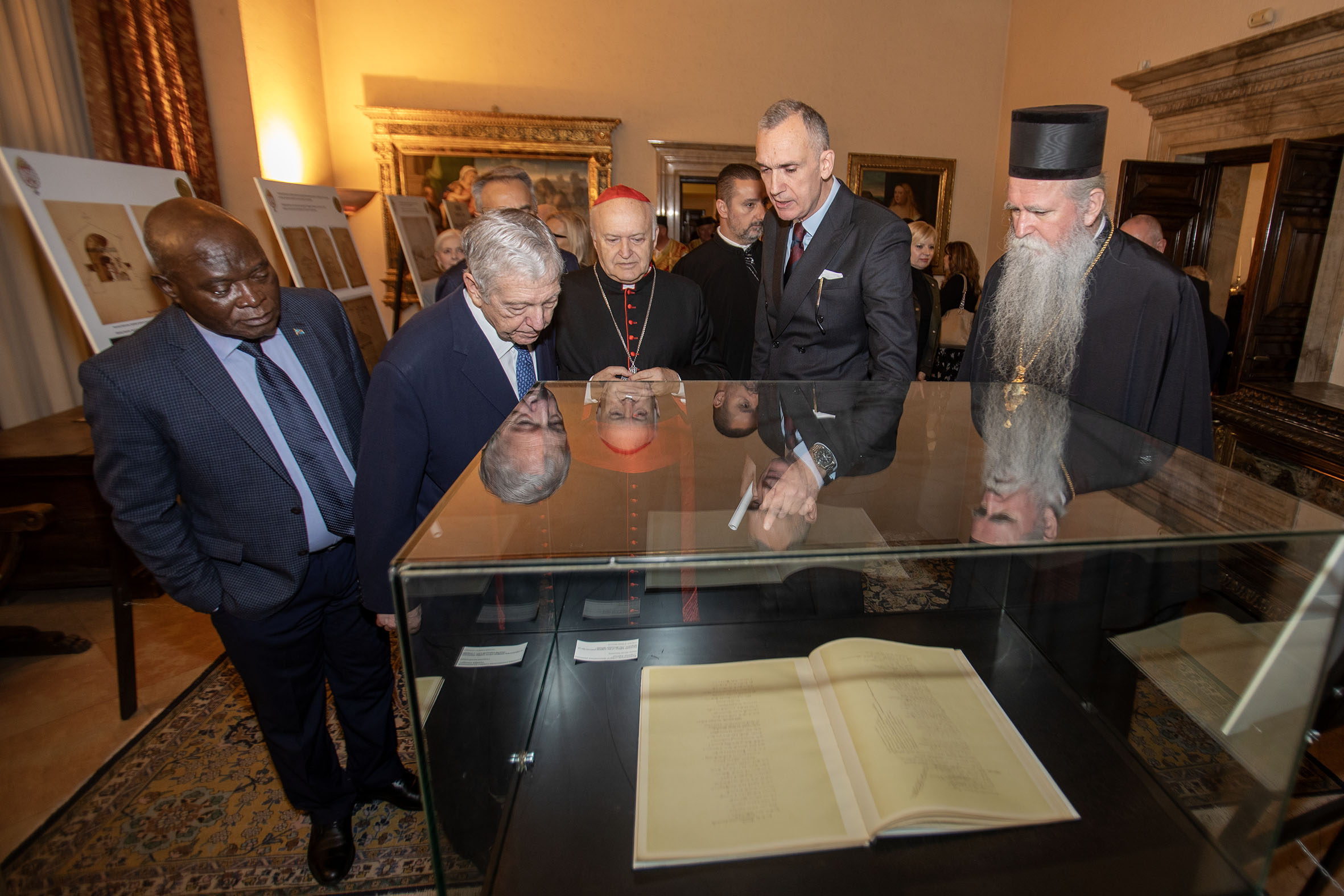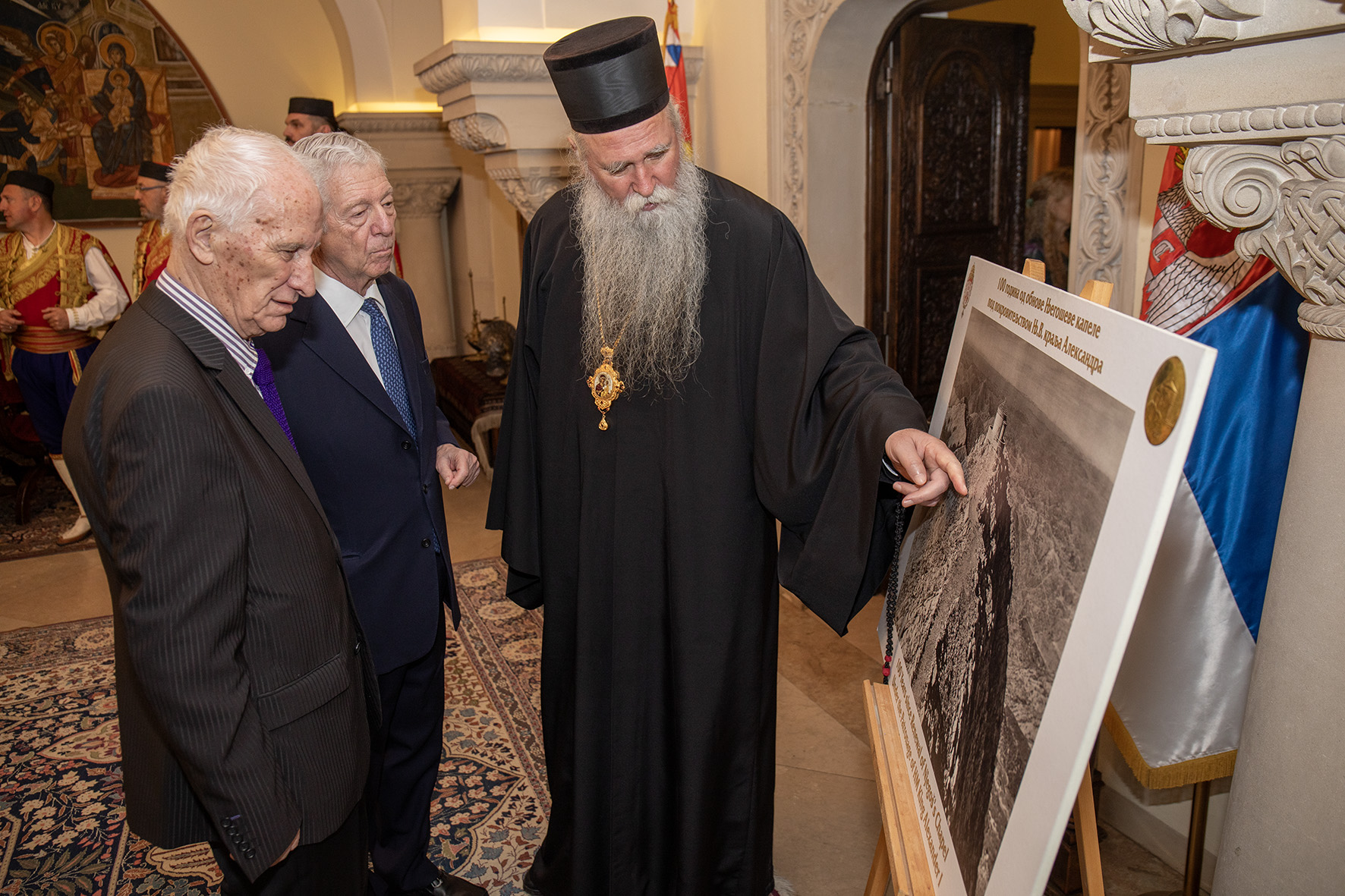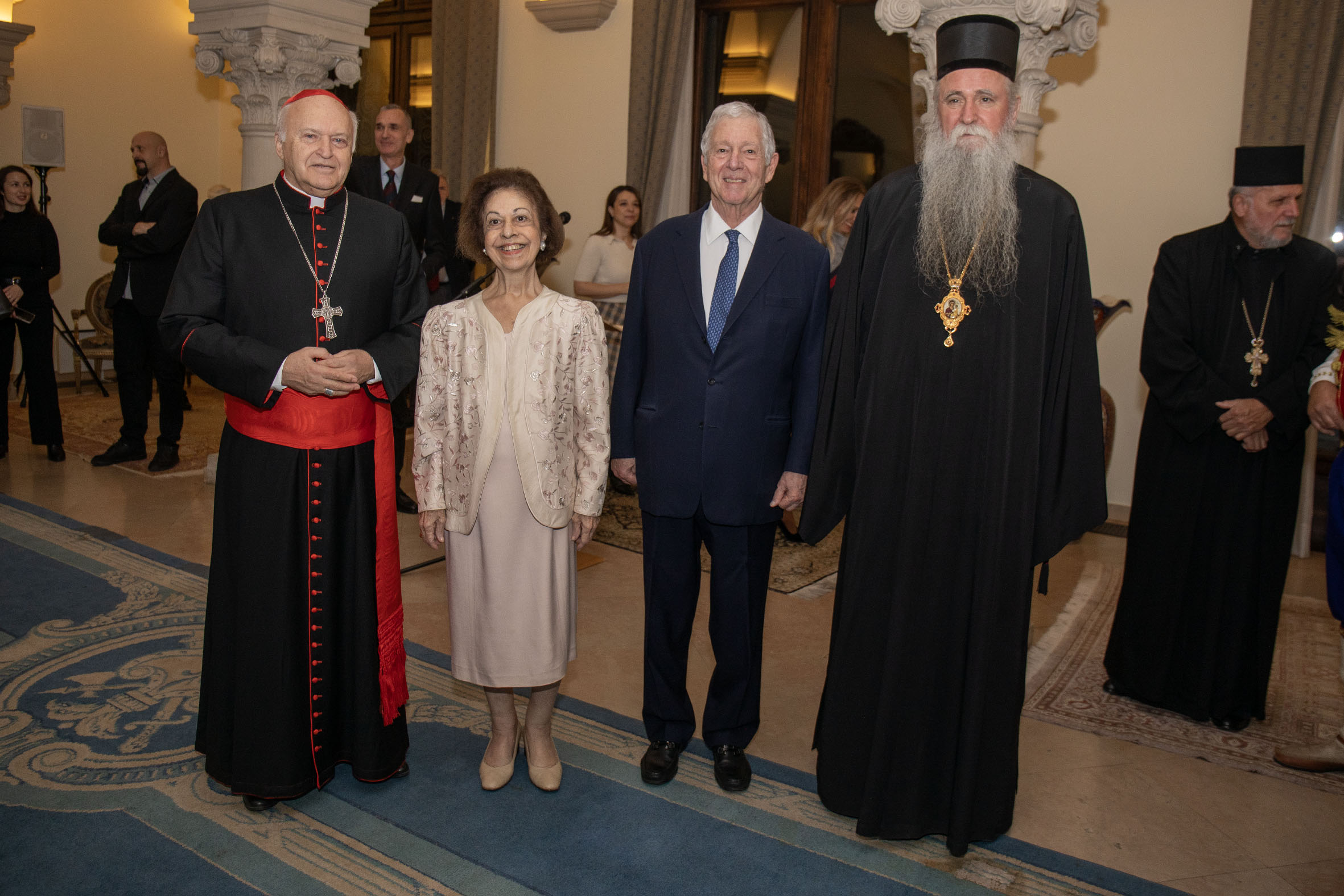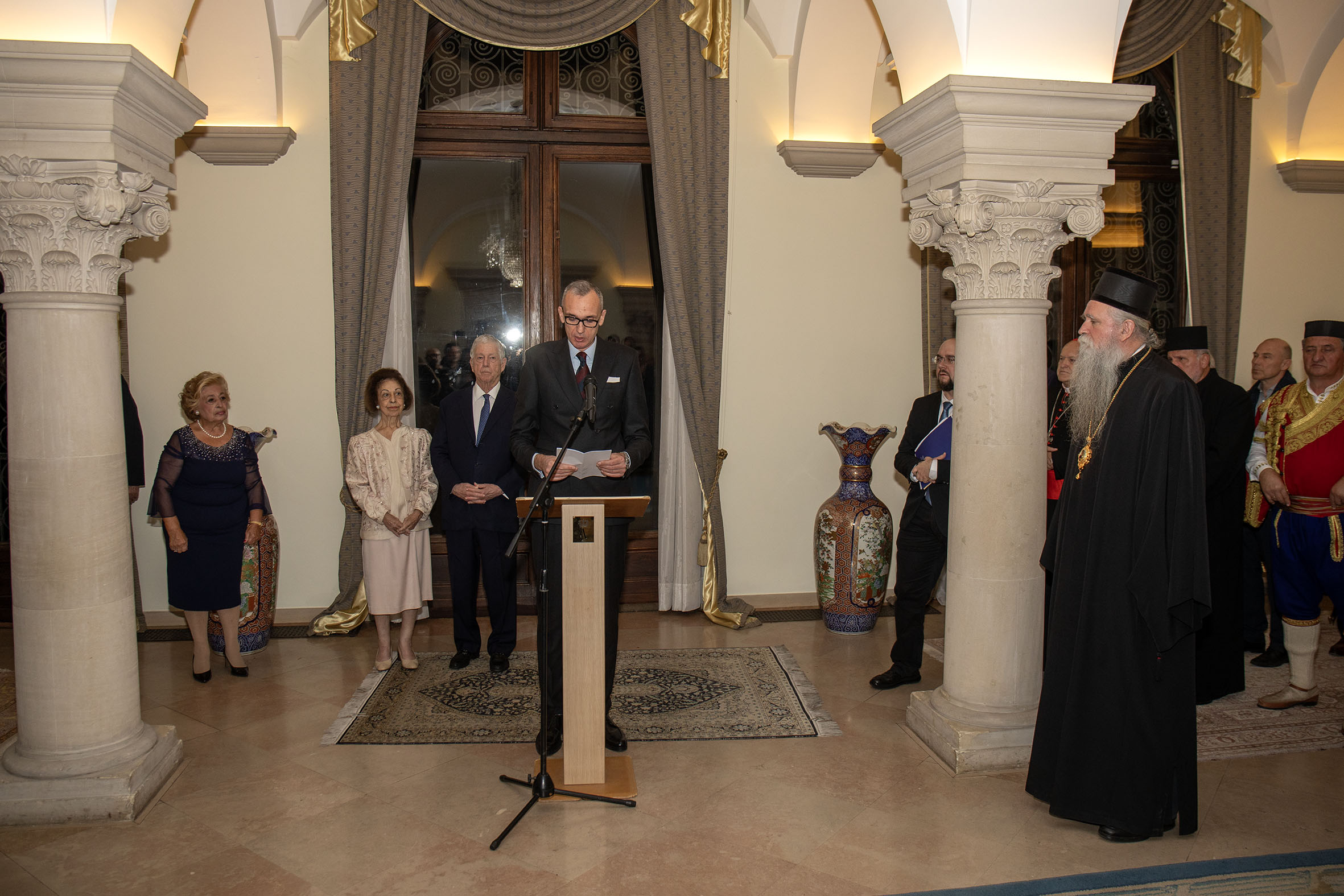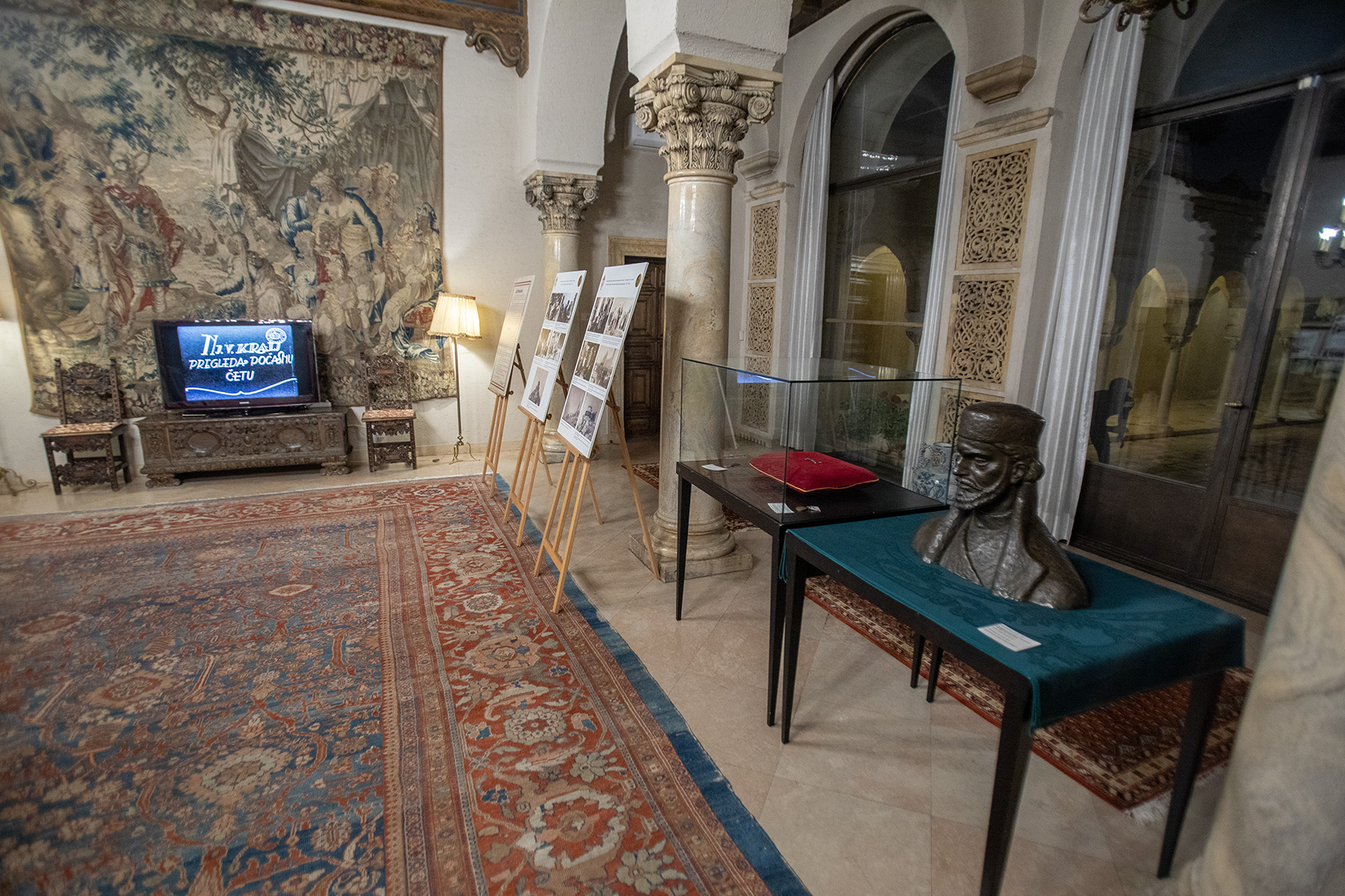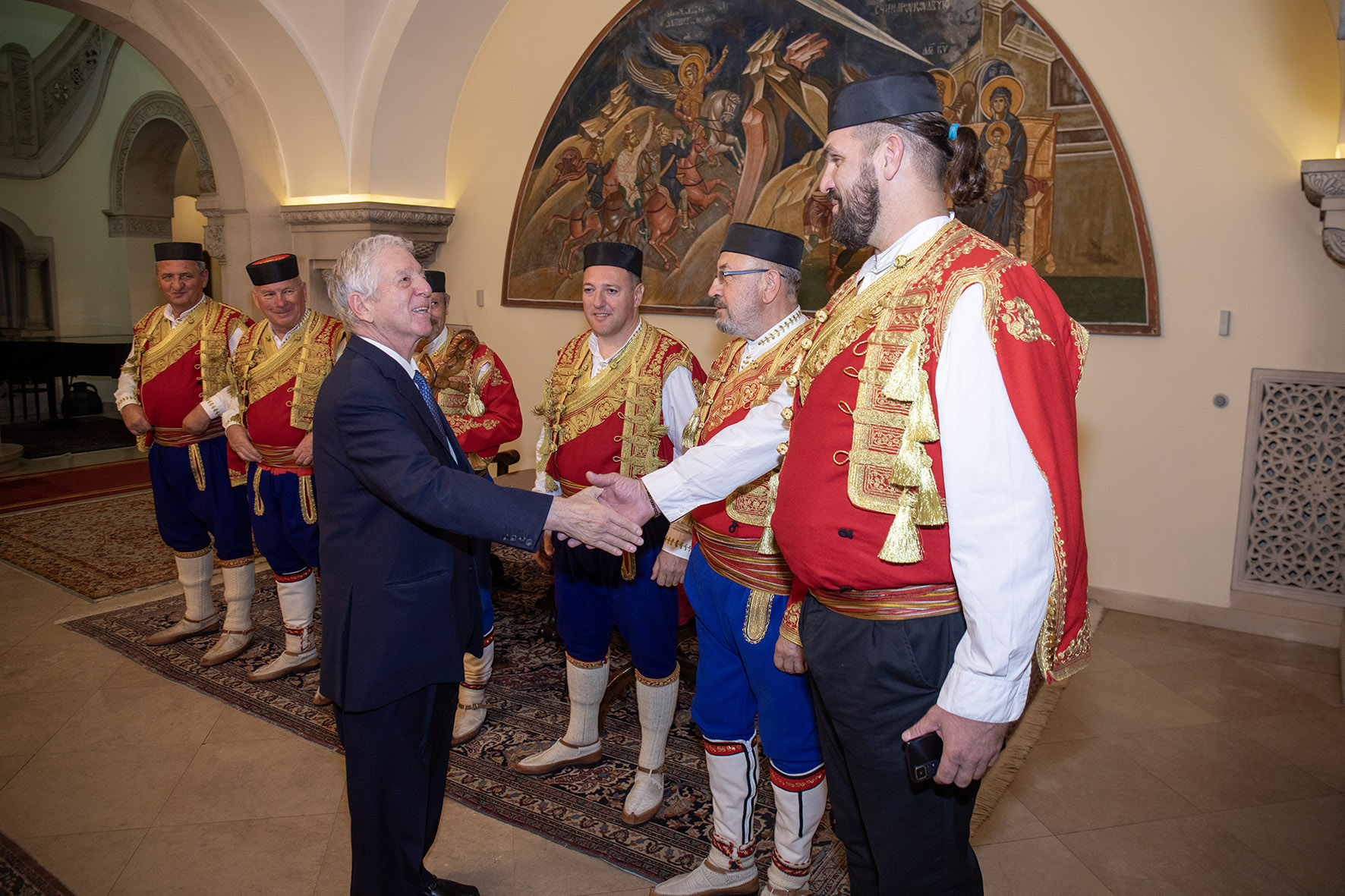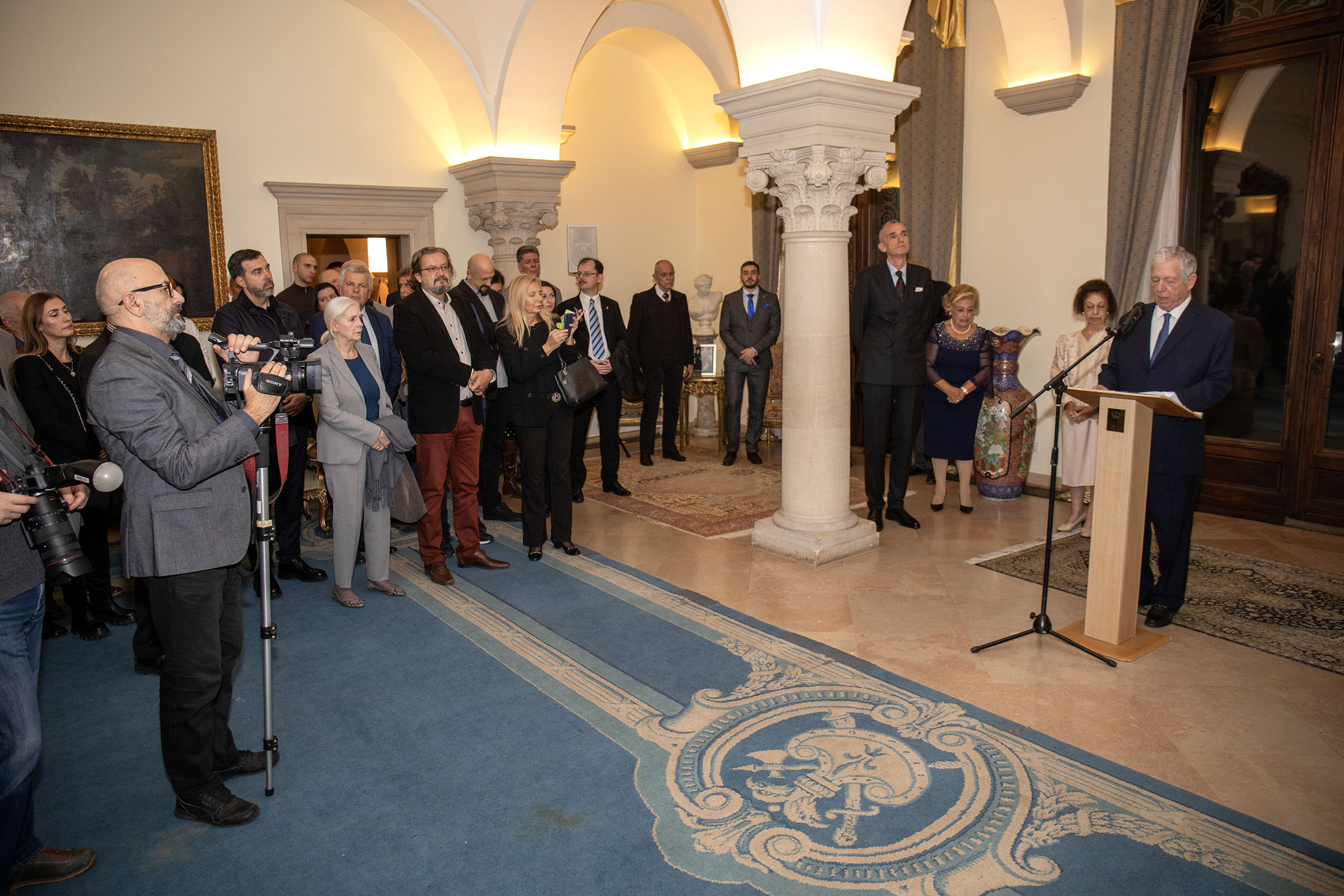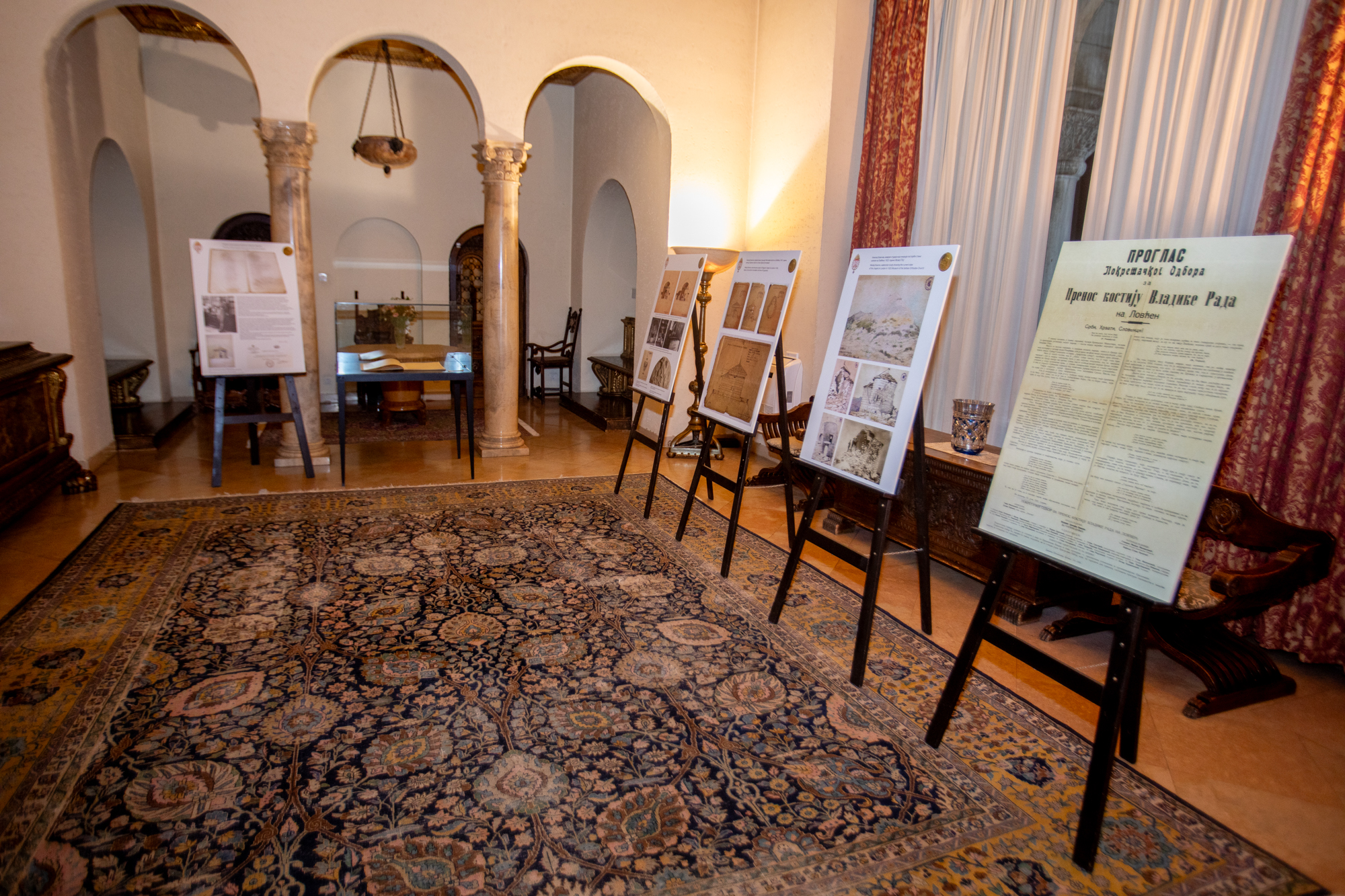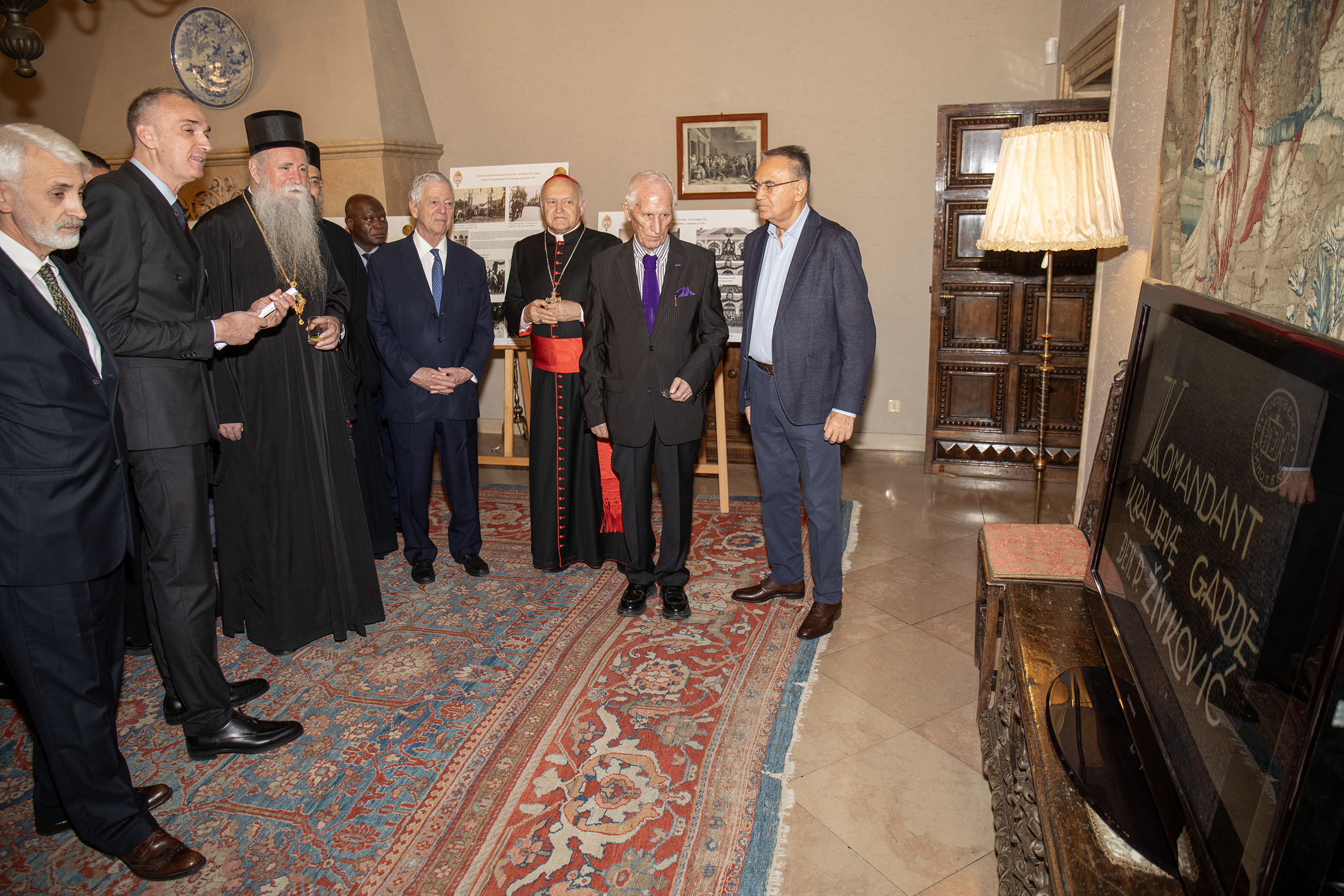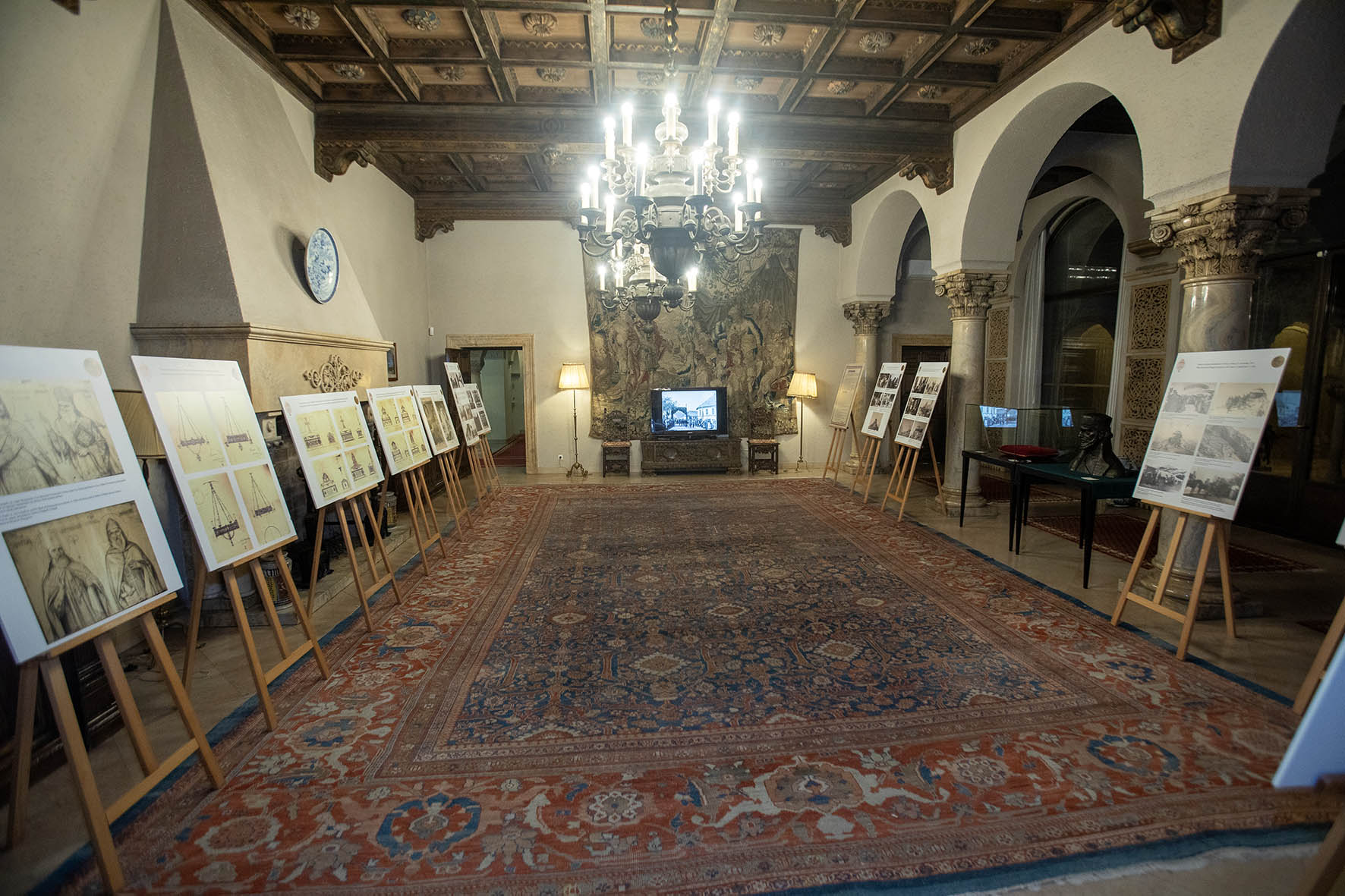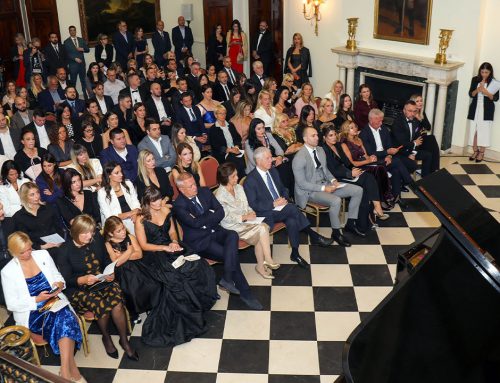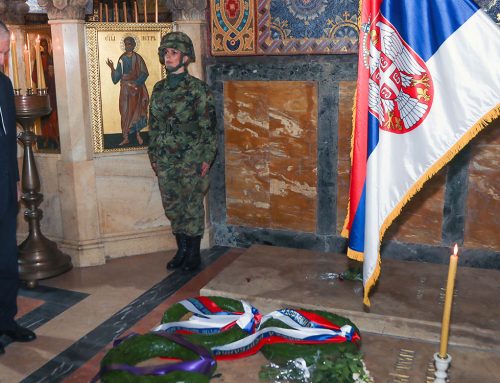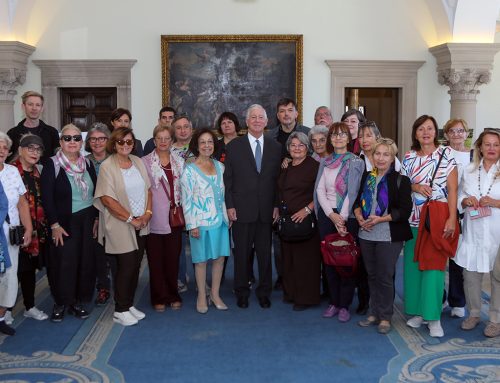
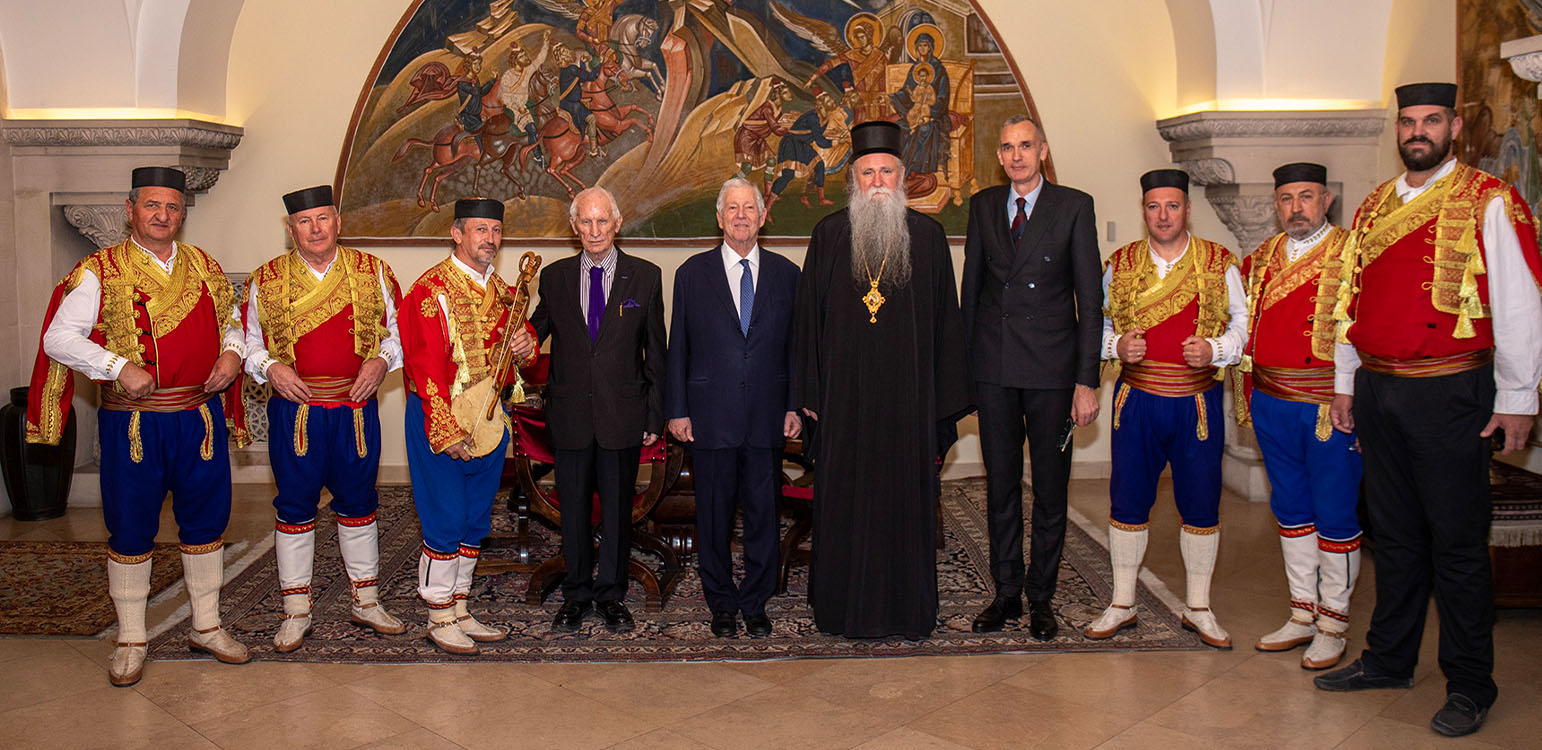
Exhibition “100 Years of the Njegos Chapel’s Renewal under the Patronage of King Alexander I” was opened today at the Royal Palace in Belgrade, Serbia. TRH Crown Prince Alexander, Crown Princess Katherine, and Prince Alexander hosted the event at the home of the Royal Family of Serbia, marking the centennial of this important historical event.
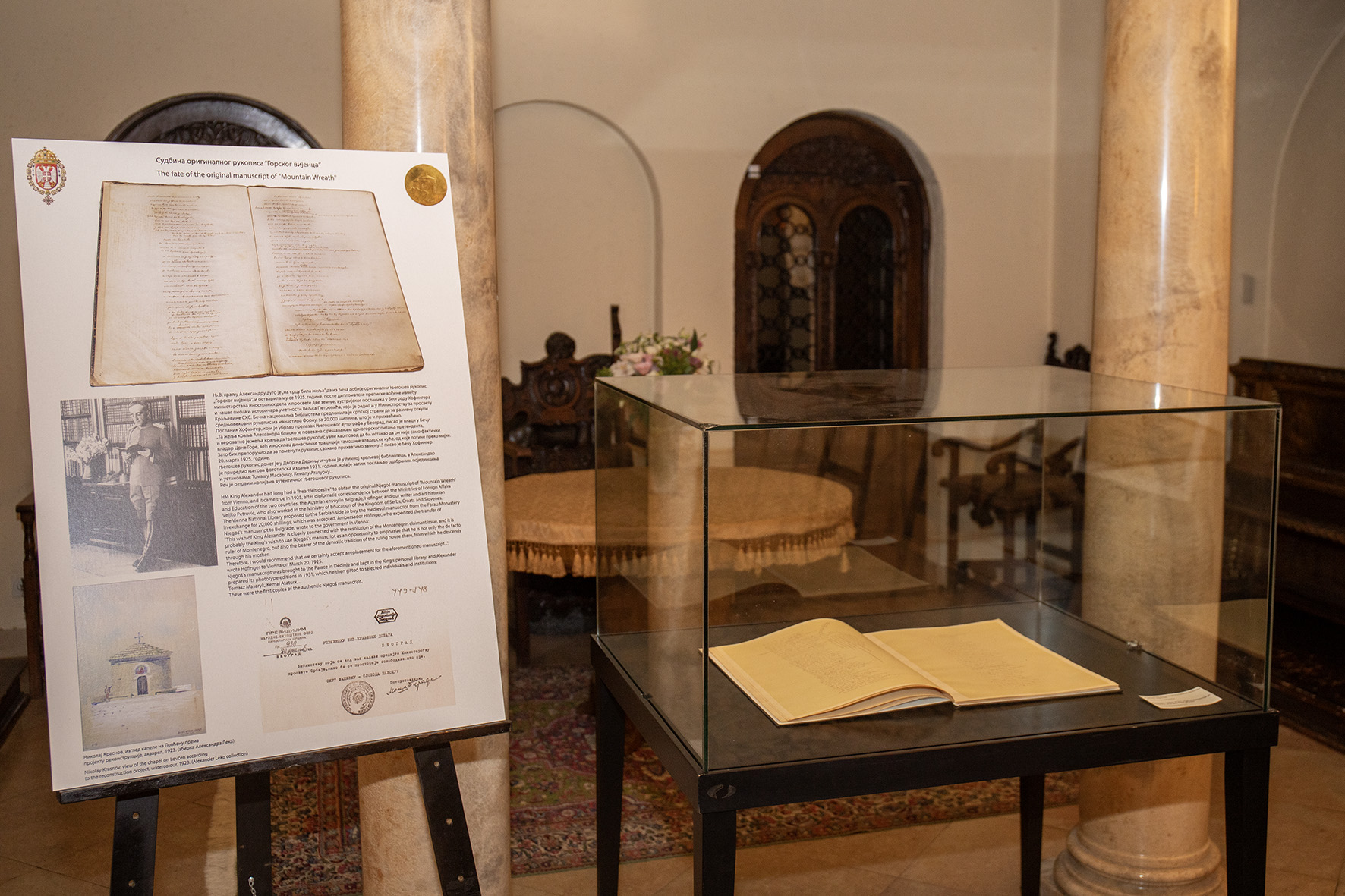
The author of the exhibition is MSc. Dušan Babac, Chairman of the Advisory Bodies of the Crown and member of the Privy Council, who carefully prepared the selection of rarely and almost never seen photos, which cast a new light on the great undertaking carried out a century ago. The often-overlooked contribution of Knightly King Alexander to the fulfilment of the last will of Bishop Petar II Petrovic Njegoš finally comes to light again with this exhibition.
“Njegoš Chapel on Mount Lovćen, a monument that stands not only as the sacred resting place of our great poet, philosopher, and statesman, but also as a symbol of the spiritual and national endurance of our people. Petar II Petrović Njegoš, Prince-Bishop of Montenegro, was a remarkable leader whose vision shaped the destiny of our nation. It was his dying wish to be buried in the chapel he built a the top Lovćen — a place where the ideals of faith, freedom, and national dignity would forever be enshrined. This chapel, consecrated in life and honoured in death, remains a lasting testament to his genius, courage, and devotion to his people.
In 1925, under the patronage of my grandfather, His Majesty King Alexander I, the Njegoš Chapel was renewed and consecrated again — an act that reaffirmed both faith and nationhood in a time of rebuilding and hope. For our family, this commemoration has a special and personal meaning. Njegoš was an ancestor of King Alexander I and, in turn, of me. His wisdom, poetic vision, and moral courage continue to illuminate our path and embody the finest virtues of our nation”, stated HRH Crown Prince on this occasion.
In addition to the selection of photos, a recently restored film shot during the renovation of the Njegoš Chapel, as well as the journey of King Alexander and Queen Maria through Montenegro and the Adriatic was presented on this occasion, thanks to the Yugoslav Film Archives, which also dispels numerous propaganda myths that have been woven over the years, moving us away from the truth.
“Today, as we celebrate this centennial, we pay tribute not only to the architectural and historical legacy of the Chapel, but also to the ideals it represents — moral strength, cultural identity, and the harmony between heaven and homeland. Lovćen remains a sacred summit in our national consciousness, a place where the spirit of Njegoš eternally speaks to us about truth, honor, and the destiny of our people.
Let this exhibition remind us that our heritage is not only to be remembered, but to be renewed — in understanding, in unity, and in love for our country. May the memory of King Alexander’s patronage, and the enduring inspiration of Njegoš himself, guide us to preserve and honour the values that have shaped our history and identity”, concluded the Crown Prince.
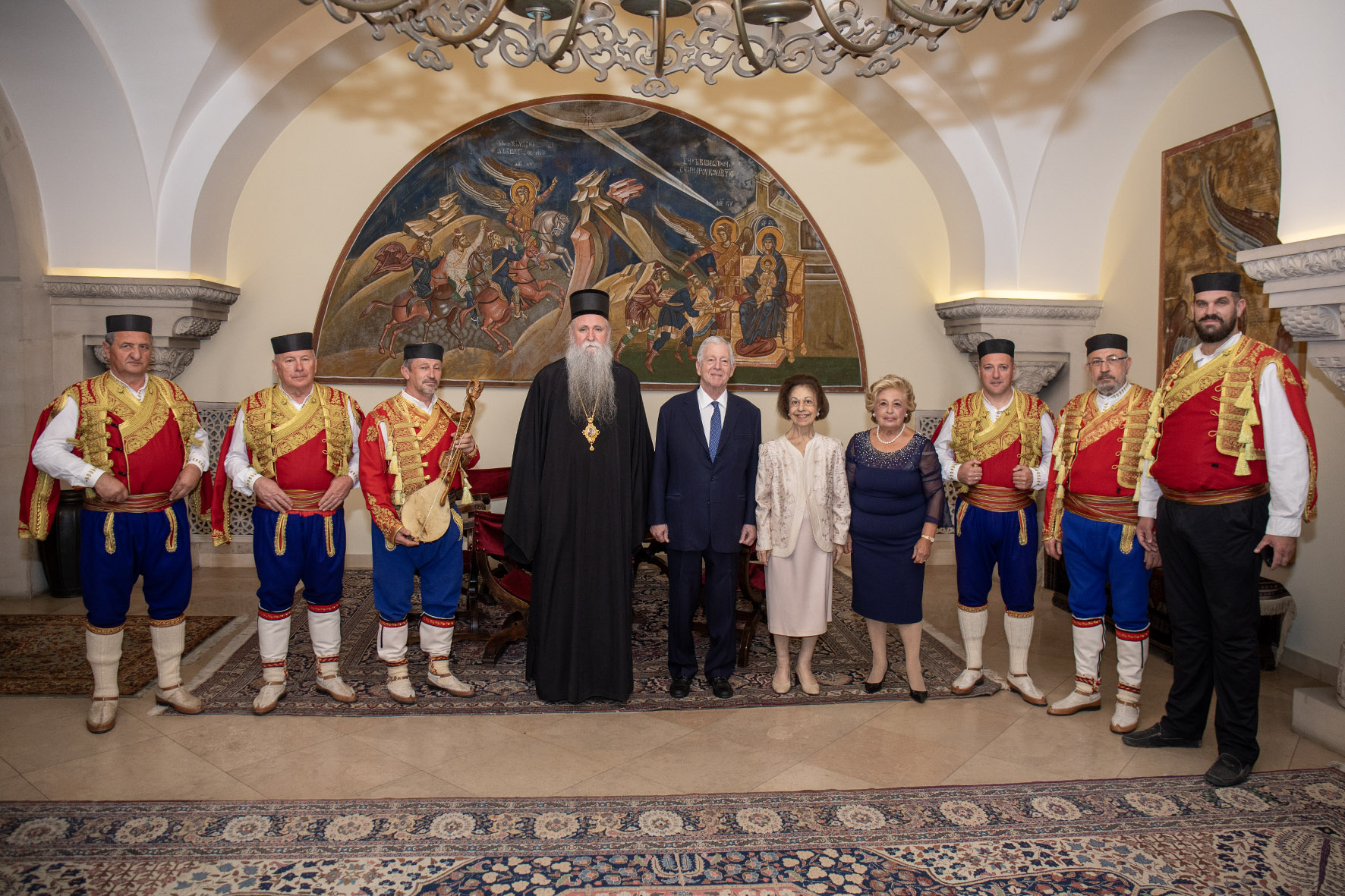
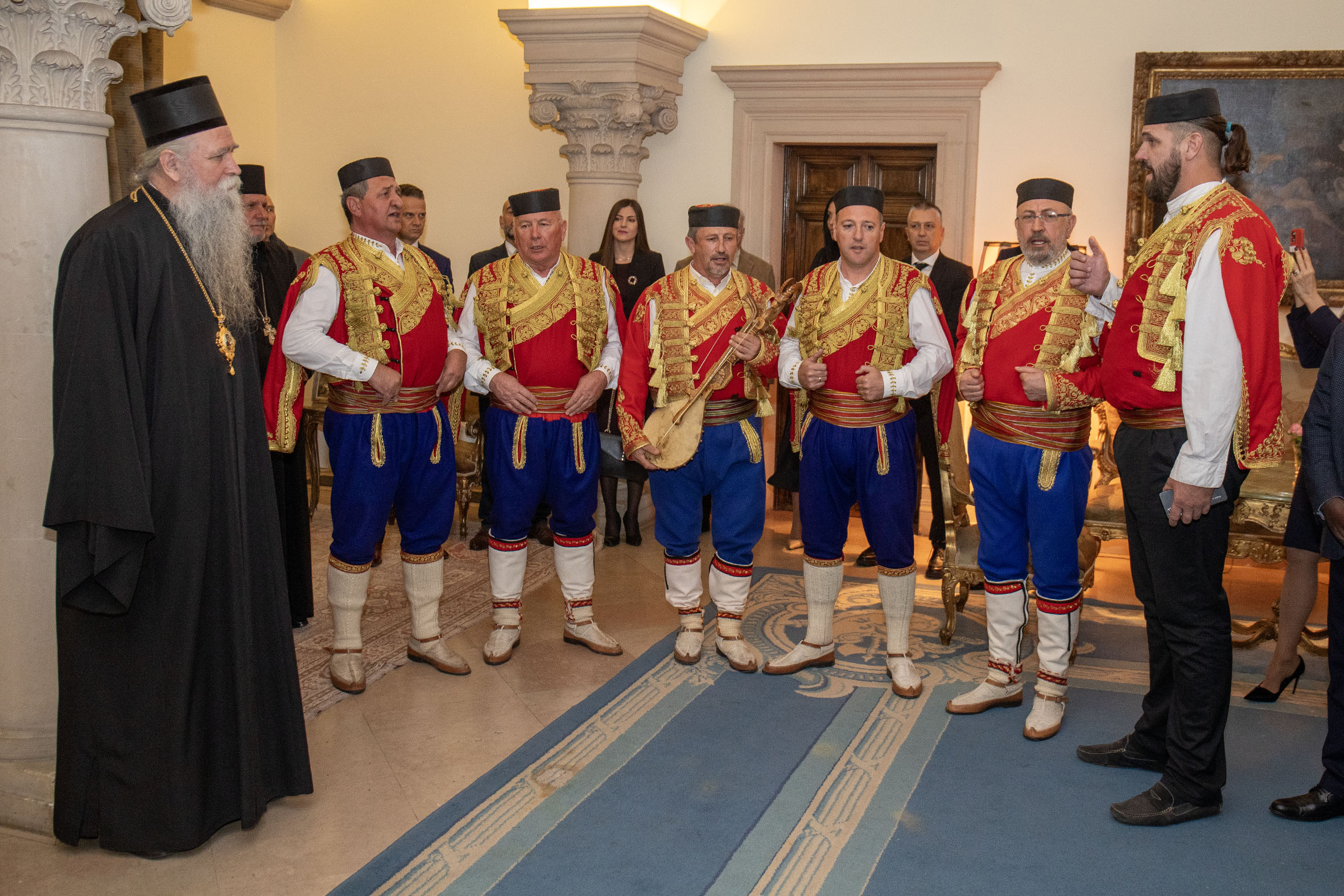
A special part of the opening program was the performance of “Onamo, ‘namo”, an old anthem of Montenegro written by HM King Nikola I Petrovic, often referred to as a “Serbian Marseillaise”, which was sung by members of the Serbian Cultural Society “Karadjordje” from Herceg Novi, Montenegro.
Mr. Babac, in his welcoming speech, said: “King Alexander I’s patronage, vision, and personal dedication made it possible for the chapel to be restored in 1925, 80 years after Njegoš himself had it built. In preparing this exhibition, I rediscovered the profound symbolism of that event. King Alexander was not just a ruler who provided funds and support — he was a man who understood that Njegoš’s chapel was more than a building, more than a national monument. It was a place of covenant, where faith, sacrifice, and statehood met.
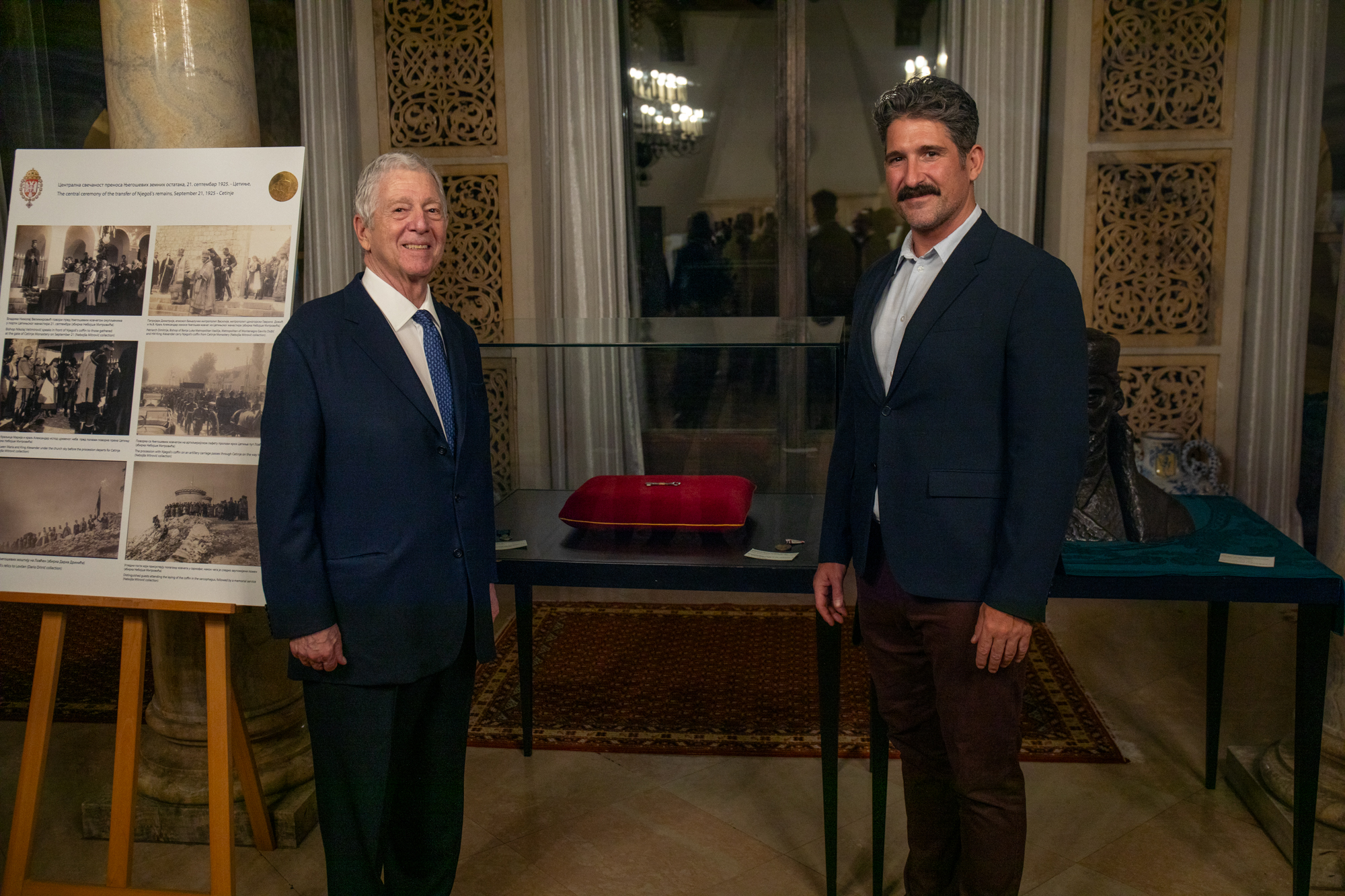
One moment from the restoration ceremony itself has remained deeply etched in history: when the coffin with Njegoš’s remains was placed in the sarcophagus, King Alexander removed the Albanian Memorial Medal from his chest and placed it next to the coffin. This gesture connected two sufferings and two exaltations — Njegoš’s spiritual and national through the Great War. At the end of the ceremony, Metropolitan Gavrilo Dožić approached the king and offered him the keys to the renovated chapel. The king then uttered words worthy of a sovereign gesture and a Christian heart:
“Let it be yours — it is the house of the Lord.”
These keys represent much more than a material object. Just as Christ handed the keys of the Kingdom of Heaven to Saint Peter, so this key from Lovćen can be understood as the key to our spiritual renewal. It opens the door of memory, but also the door of hope.”
The opening ceremony was attended by His Eminence Metropolitan Joanikije of Montenegro and the Littoral, His Grace Bishop Tihon of Moravica, vicar of His Holliness Patriarch Porfirije of Serbia, His Eminence Cardinal Dr Ladislav Nemet, Metropolitan and Archbishop of Belgrade, Their Excellencies Ambassadors of Congo, Mr. Joseph Kalala Mulamba, of Czech Republic, Mr. Jan Bondy, of the Holly See Apostolic Nuncio to Serbia, HE Archbishop Santo Gangemi, and of Ireland, Mr. Kevin Colgan, and other representatives of the diplomatic corps, Mrs Betty Roumeliotis, the Crown Princess’s sister, members of the Advisory Bodies of the Crown, representatives of state and cultural institutions, as well as many other distinguished guests from the spheres of business, art, culture, and the public life of Serbia.
The author also reminded that the Knightly King was also deserving of obtaining the original edition of Njegos’ “Gorski vijenac”, which was kept at the Palace Library, and used to create a phototype edition. “It was the king who returned Njegoš’s work to his home and people. Today’s exhibition seeks to preserve the memory of that great act of restoration, but also to present King Aleksandar not only as a ruler, but as a man of deep faith, culture, and love for his people and their holy places. I hope that this exhibition will remind all of us that Njegoš’s Chapel is more than a building – it is a place of covenant, a symbol of the lasting connection between faith, statehood and culture”, concluded Mr. Babac.
The exhibition “100 Years of the Njegos Chapel’s Renewal” will be open to visitors on weekdays until 28 November, between 11:00 am and 2:00 pm, with prior announcement to HRH Crown Prince Alexander’s Office, by phone +38111306 4000 or via e-mail: [email protected].
We are grateful to Arch. Dragomir Acović, Academician Matija Bećković, Museum of the Yugoslav Cinematheque, Museum of the Serbian Orthodox Church, Archives of Yugoslavia, National Museum Zrenjanin, Military Museum, National Library of Serbia, Prof. Čedomir Vasić, Mr. Aleksandar Lek, Mr. Nebojša Mitrović, Mr. Miladin Marković, Mr. Borko Marjanović, Mr. Jovan Markuš, and Theologian Dario Drinić for their great support in the realisation of this exhibition.
To conclude with the words that were engraved in gold letters on a marble memorial plaque at the entrance to the church on Lovćen: “We Alexander I, King of the Serbs, Croats and Slovenes, great-grandson of Karađorđe Petrović, the leader and initiator of the liberation of Serbia, grandson of Prince Aleksandar Karađorđević, and son of Peter I, the great liberator and unifier of our people, and Princess Zorka Petrović Njegoš, have restored this holy temple, which was built on Lovćen near Cetinje and chosen as an eternal house by our famous ancestor Petar Petrović Njegoš, Bishop and Lord of Montenegro, great patriot, poet of the freedom of Montenegro, admirer of the Topola Hero Karađorđe the Immortal and apostle and poet of the unity of our people, which was destroyed in the war for liberation and unification in 1916. May his ashes rest in peace. May his holy blessing be poured out on our home and nation, throughout the centuries. Amen. On Lovćen, 21 September 1925.”